


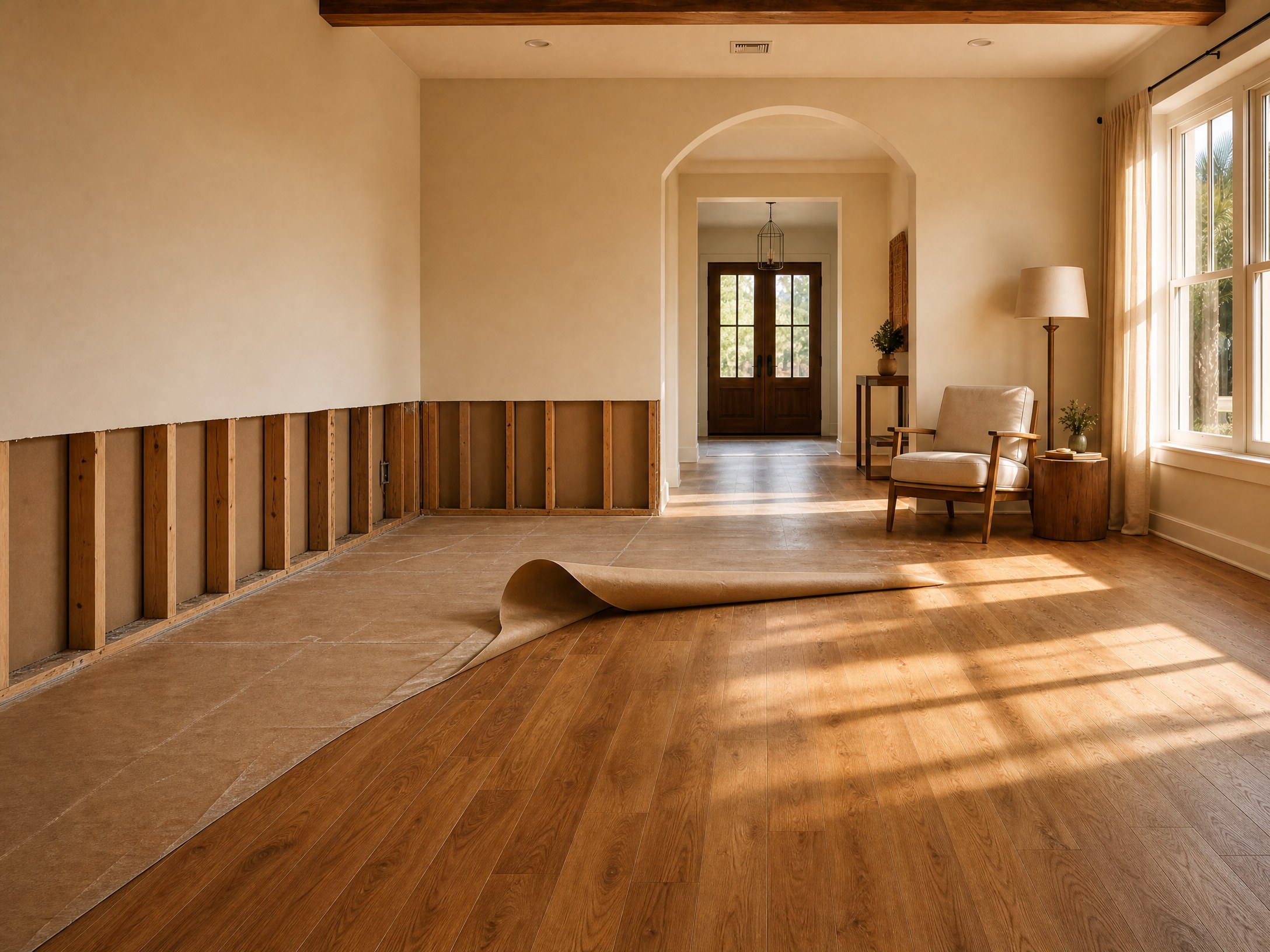
Why a careful demo scope protects the rebuild
Quick answer: The demolition scope after a loss almost always looks larger than the visible damage, and there are three reasons for that. Porous materials wick moisture well beyond the waterline, so what looks dry often is not. Contaminated water requires removing materials that clean water would not. And you cannot dry what you cannot reach, so cavities have to be opened. The straight horizontal cut you see in drywall is called a flood cut, and it is deliberate. Demolition that stops at the visible damage is the most common cause of a mold problem three weeks later.
Coming home to find half your walls opened up is alarming. Understanding the logic makes it considerably less so, and it also lets you ask better questions about whether the scope is right.
Selective demolition is not demolition
Two different things share a word.
Demolition means taking a structure down. Selective demolition, sometimes called controlled demo, means removing specific damaged materials while protecting everything that stays: the structure, the systems, the finishes in adjacent rooms, and your belongings.
It is a precision activity. Done well, the cuts are straight, the transitions land where new material can be attached cleanly, containment keeps dust out of the rest of the building, and salvageable items come out intact rather than in pieces. Done badly, it creates work that did not need to exist.
Reason one: water travels further than it looks
Water moves through porous building materials by capillary action, upward and outward from where it entered. Drywall, insulation, particleboard, carpet pad, and untreated wood all wick.
The visible waterline is where the water was, not where the moisture is. Moisture meters and thermal imaging map the actual extent, which is routinely higher up the wall and further into the room than the stain suggests.
This is why the cut line is usually well above the visible mark. The technician is cutting to where the material actually reads dry, plus a margin.
Reason two: the category of water changes the rules
The restoration industry classifies water into three categories, and the category drives what can be dried in place versus what must be removed.
- Category 1, clean water: Examples include a supply line, water heater, or rain entering through an opening. Much can be dried in place if addressed quickly.
- Category 2, gray water: Examples include appliance discharge or a toilet overflow without solids. More material is removed, particularly porous items.
- Category 3, black water: Examples include sewage, outside floodwater, or water that has sat. Porous materials are removed rather than dried in place.
Floodwater from outside is Category 3, regardless of how clean it looks. It has crossed streets and ground before reaching the building. That is why a flood produces a much larger demolition scope than a burst supply line of the same volume.
Clean water also degrades. Category 1 water that has been standing for days is no longer Category 1, which is a large part of why response speed changes project cost.
Reason three: you cannot dry what you cannot reach
Moisture trapped in a wall cavity, under a cabinet toe-kick, beneath a floating floor, or above a ceiling will not dry on its own in Florida humidity. It redistributes into framing and sits there.
Opening those cavities is what makes drying possible. Drilling holes and pushing air behind a wall works in some situations, but where insulation is saturated, the insulation has to come out. Wet insulation holds water against framing indefinitely and loses its thermal performance permanently.
What the flood cut actually is
That straight horizontal line across the drywall has a name and a purpose.
It is cut at a consistent height, commonly two or four feet, above the highest point of moisture. Those heights are not arbitrary: drywall comes in four-foot widths, so cutting at two or four feet means the replacement piece installs without unnecessary seams and lands on framing.
A neat flood cut is a sign of a crew that is thinking about the rebuild while doing the demo. A ragged, variable-height tear-out means the reconstruction crew has more work to do, and you pay for that work.
What usually stays
Demolition scopes should be defended, not assumed. These commonly survive:
- Framing and structure, unless rotted, contaminated, or structurally compromised
- Tile on concrete slab, often salvageable once the substrate is verified dry
- Solid wood in many Category 1 situations, depending on how long it was wet
- Cabinet boxes made of plywood rather than particleboard, sometimes
- Undamaged rooms, which should be protected rather than opened
If a scope proposes removing something in this list, there should be a reason available, whether that is a moisture reading, contamination, or a code requirement. Asking for the reason is entirely fair.
What usually goes
- Wet insulation, essentially always
- Carpet pad in nearly all water losses; the carpet itself sometimes
- Particleboard and MDF, which swell and lose integrity permanently
- Drywall below the cut line, and all drywall in Category 3 events
- Baseboard and trim in the affected area, often reusable elsewhere if removed carefully
- Anything porous touched by Category 3 water
Questions worth asking about your demo scope
Can I see the moisture readings? Any legitimate operator maps moisture with meters and thermal imaging and can show you the numbers behind the cut line.
What category is this water? It determines the scope, so it should be stated clearly rather than implied.
Why this height? There should be an answer involving readings plus a margin, not just habit.
What is being protected? Containment, floor protection, and a plan for contents should be part of the scope, not an afterthought.
Who is putting it back? This is the one people forget. A crew that only demolishes has no reason to care whether the cuts make reconstruction easier. When the same company handles demolition and rebuild, the demo is done with the rebuild in mind, and there is nobody to blame at the handoff because there is no handoff.
The honest note about scope
Over-demolition is real and it happens. So does under-demolition, and it is far more expensive in the long run, because the cost arrives later as mold remediation plus a second round of reconstruction in rooms that were already finished.
The defense against both is documentation. Moisture readings before, during, and after. Photographs of what was found inside the walls. A scope you can see the reasoning behind. If you are ever unsure whether a proposed scope is right, a second opinion with independent moisture readings is a reasonable thing to get, and a contractor confident in their scope will not object.
Frequently asked questions
Why is the demolition scope larger than the visible damage? Because water wicks through porous materials well beyond the visible waterline, because contaminated water requires removing materials that clean water would not, and because cavities have to be opened in order to dry them. Moisture meters and thermal imaging define the actual extent, which is usually greater than the stain shows.
What is a flood cut? A straight horizontal cut in drywall, usually at two or four feet, made above the highest point of measured moisture. Those heights match standard drywall dimensions so the replacement piece installs cleanly and lands on framing.
Does all the drywall have to come out after a flood? For Category 3 water, such as sewage or floodwater from outside, porous materials in the affected area generally come out rather than being dried in place. For clean water addressed quickly, much less removal is typically required.
Can wet insulation be dried and reused? Generally no. Wet insulation holds water against framing, dries very slowly if at all in Florida humidity, and loses its thermal performance permanently. It is one of the most consistent removals in any water loss.
How do I know the demolition scope is not excessive? Ask to see the moisture readings, the water category, and the reasoning behind the cut heights. A documented scope can be explained. If you remain unsure, an independent set of moisture readings is a reasonable second opinion.
Should the same company do demolition and reconstruction? It is usually better. A crew that will also rebuild has a direct interest in cuts that land on framing and transitions that make reconstruction cleaner, and there is no handoff where responsibility can be disputed.
Related resources
- Rebuild Post Loss
- Flooring Replacement
- The Process
- Reconstruction Is the Missing Link Between Cleanup and a Finished Property
Important information
Water category definitions follow standard restoration industry classification. Demolition scope decisions depend on moisture readings, water category, material type, and local requirements for the specific property. This article is general information rather than a scope determination for any particular loss.
If your property has been damaged and you want a demolition scope explained before work begins, call SP Reconstruction at (877) 716-1520. We can help you understand how the removal work supports a clean, efficient reconstruction.
What Does Property Reconstruction Cost? Factors That Affect the Price
Wondering how much it costs to rebuild after water, fire, or storm damage? This guide breaks down the key factors that influence property reconstruction costs and how insurance fits in.
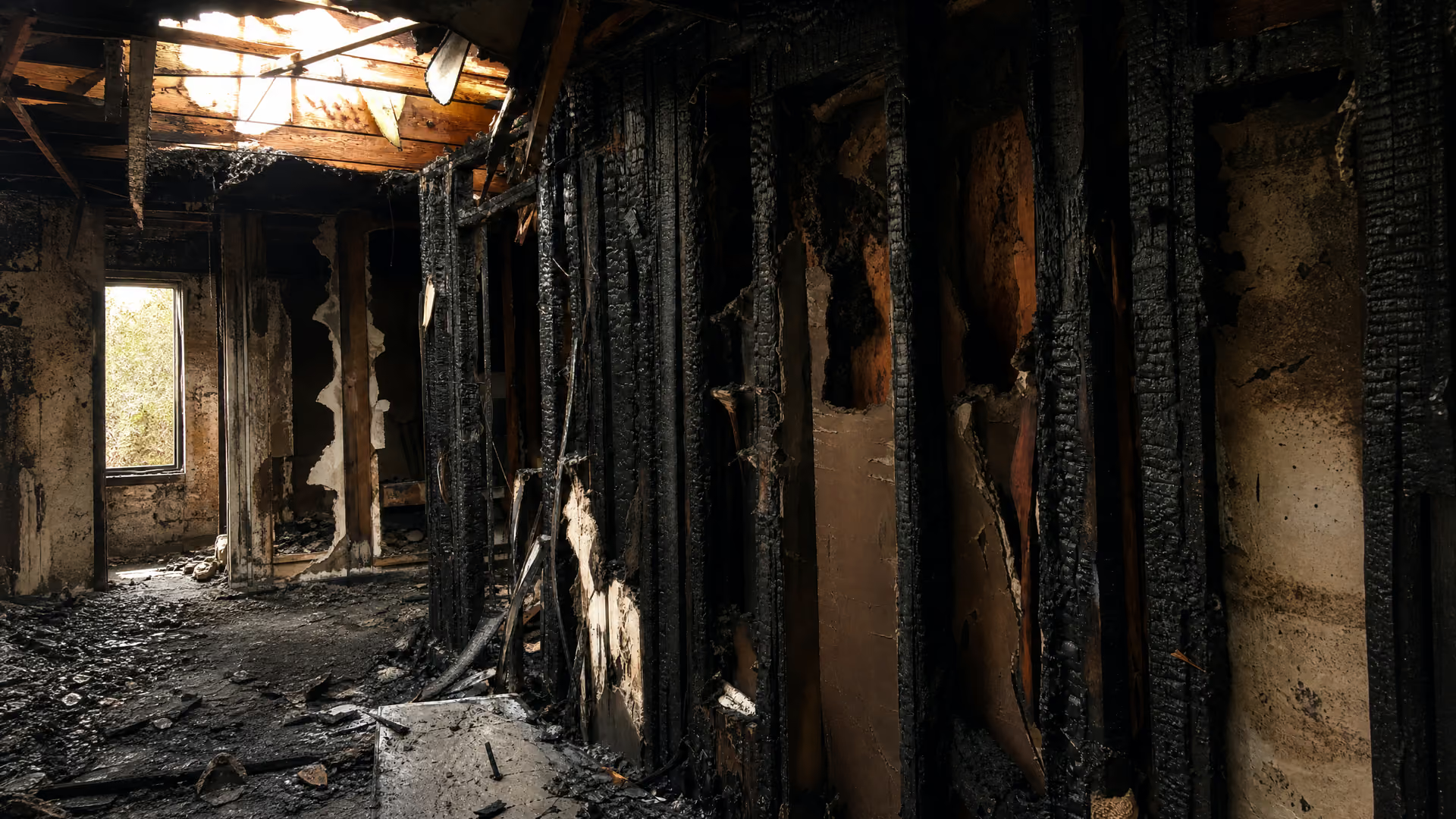
Fire and Storm Reconstruction: What Happens After the Emergency Is Under Control
Learn how fire and storm reconstruction connects emergency stabilization, cleanup, and rebuilding after property damage.


