


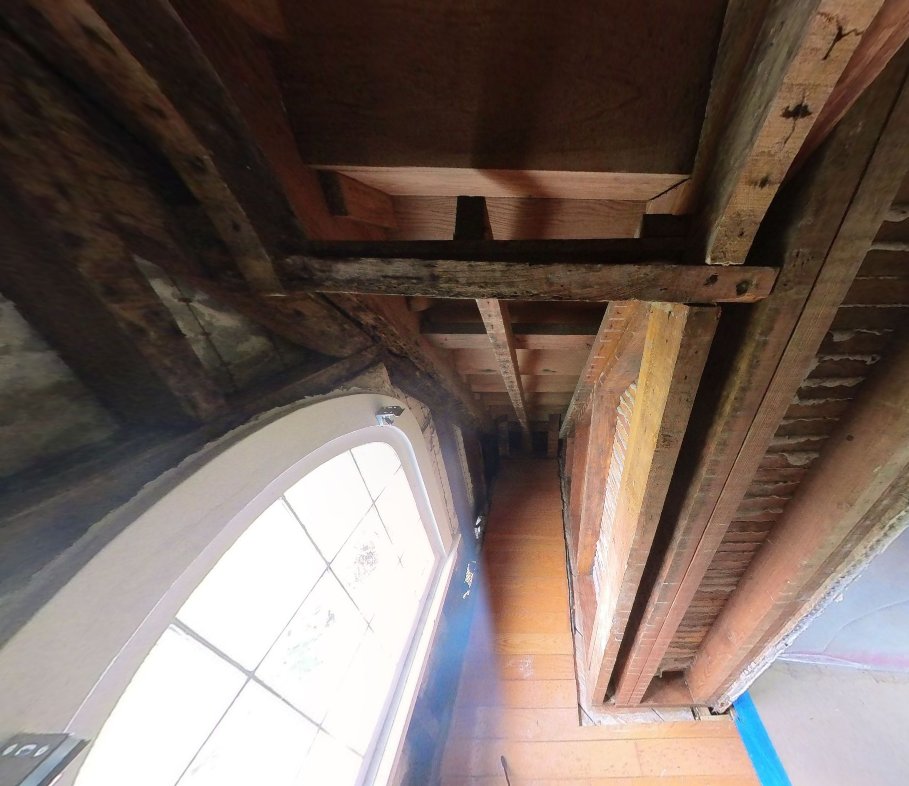
Quick answer: If the plaster is still bonded to its lath or masonry and only a section got wet, repairing it usually keeps the wall looking and sounding the way the rest of the house does. If the plaster has let go of its base across a large area, or the wall has to be opened anyway for plumbing or framing, switching that section to drywall can make sense. Either way, older walls should be tested for lead paint, and often for asbestos, before anyone starts cutting.
Why plaster shows up so often in Tampa Bay rebuilds
Plenty of homes around Plant City, Lakeland, Tampa and St. Petersburg were built before drywall became the default. Some have wood lath behind the plaster. Many Florida block homes have plaster applied straight to the concrete block.
Those walls are tough. They also behave differently from drywall when water gets to them, and a crew that only knows drywall can turn a small repair into a full room tear out without meaning to.
What water actually does to plaster
Drywall is paper and gypsum. When it soaks, it sags and has to come out.
Plaster is harder, and it can survive getting wet if it dries in time. The real question is not "did it get wet." It is "did it stay attached." Here is what to look for:
- Bubbling or blistering paint. Often the paint failed, not the plaster. That can be a surface fix.
- Soft or crumbling spots. The plaster itself is breaking down. That section needs to come out.
- Hollow sound when you tap it. On lath walls, the plaster may have lost its grip on the lath. That is the big one.
- Cracks that grow or step across the wall. These can point to movement in the wall or framing behind it, not just water.
- Stains that keep coming back. Moisture is still getting in somewhere. Fix the source before you fix the wall.
Plaster also holds moisture longer than drywall does. A wall can feel dry on the face and still be wet deeper in. That is one more reason the repair should not start until drying is confirmed with meters, not by touch. We wrote more about that in why reconstruction should never start before drying is complete.
Test before anyone cuts
This is the step people skip, and it matters most in older homes.
Lead paint. The EPA's Renovation, Repair and Painting rule covers work that disturbs painted surfaces in homes built before 1978. Contractors doing that work on a pre-1978 home need to be certified and follow lead safe work practices. If your house is that old, assume the paint needs to be tested before plaster comes off the wall.
Asbestos. Some older plaster, joint compound and textured finishes contain asbestos. You cannot tell by looking. A sample sent to a lab is the only way to know.
Testing is not about slowing the job down. It decides how the demolition gets done, how the area gets contained, and who is allowed to do it. Finding out halfway through a tear out is the expensive way to learn.
Repair the plaster or switch to drywall?
There is no single right answer, but the decision usually comes down to a few questions.
How much of the wall is affected? A patch the size of a doorway in an otherwise sound wall is a good candidate for a plaster repair. Damage across most of a room changes the math.
Is the plaster still keyed to its base? Plaster that is still bonded can be patched and blended. Plaster that has let go of the lath over a wide area usually cannot be saved cheaply.
Does the wall need to be open anyway? If the plumber, electrician or framer needs access, the section is coming out regardless. Then the question becomes what goes back.
Will it match? This is where people get surprised. Plaster walls are usually thicker than a single layer of drywall and have a different finish. Drop a sheet of drywall into a plaster wall and you can end up with a step at the seam, trim that no longer sits flat, and a surface that reads differently in raking light. Good crews shim the drywall out to match the plaster depth or use a skim coat so the transition disappears.
How does it sound and feel? Plaster walls are dense. They block sound better than standard drywall. Some owners do not notice the change. Others notice it right away in a bedroom or office.
What a careful plaster repair looks like
When the plaster is worth saving, the work usually runs in this order:
- Confirm the source is fixed and the wall is dry.
- Test for lead and asbestos where the age of the home calls for it.
- Cut back to sound material. Damaged plaster gets removed until the edges are solid and well attached.
- Reattach loose plaster around the edges where it has lifted from the lath, so the patch is not sitting next to a weak spot.
- Rebuild the base. That can mean new lath, a bonding agent on block, or a board backer, depending on what was behind it.
- Build up the patch in coats to match the depth of the surrounding wall.
- Match the finish. Smooth, sand or textured, it has to blend with the rest of the room.
- Prime and paint the full wall, not just the patch, so the repair does not show.
That last step is worth asking about. Painting only the patched square almost always leaves a visible outline. You can see what the preparation stage looks like on a recent plaster repair and restoration project.
What about insurance?
If the water damage came from a covered event, like a sudden pipe break, the wall repair is often part of the claim. Policies are generally written to return the damaged area to its condition before the loss, which is why the type and finish of the wall matters when the scope is written.
Make sure the estimate says what the wall actually is. A scope that prices standard drywall for a plaster wall may not cover the work needed to make the repair match. If the estimate comes up short, ask the contractor to document the wall type with photos and line items before the work starts. Our guide on how the insurance reconstruction process works walks through that part step by step.
Every policy is different, so read yours and talk to your adjuster before deciding how the wall gets rebuilt.
Questions to ask any contractor before they open a plaster wall
- Have you tested, or will you test, for lead and asbestos before demo?
- Are you planning to patch the plaster or replace it with drywall, and why?
- How will you match the wall thickness and finish at the seams?
- Will the full wall be primed and painted, or just the repair?
- Who handles permits if framing, plumbing or electrical work is involved?
If the answers are vague, keep asking. For more on picking the right team, see how to choose a reconstruction contractor after property damage.
Frequently asked questions
Can wet plaster be saved? Often, yes. If it dries in time and stays attached to its base, plaster can usually be repaired and refinished. Soft, crumbling or detached sections need to come out.
Is drywall cheaper than repairing plaster? For large areas, replacing with drywall is often less expensive. For small sections in an otherwise sound wall, a plaster repair can cost less than tearing out and rebuilding a whole wall to make drywall blend in.
Do I need to test for lead before plaster repair? If the home was built before 1978, the painted surfaces should be treated as possible lead paint until tested, and work that disturbs them falls under the EPA's lead safe renovation rule.
How long does a plaster repair take? It depends on the size of the area and how many coats it needs to cure. Plaster is built up in layers, so it generally takes longer than hanging and finishing drywall. Your contractor should give you a timeline once the wall is opened and assessed.
Will my repaired wall look different? It should not, if the depth and finish are matched and the whole wall is painted. Ask to see how the contractor plans to handle the seams before work starts.
Talk to the SP Reconstruction team
SP Reconstruction rebuilds homes and businesses across Plant City and the Tampa Bay area after water, fire and storm damage, including older homes with plaster walls that need to be repaired the right way. If you are looking at wet or cracked plaster and are not sure what to do next, contact us or call (877) 716-1520. Learn more about our rebuild after loss services.
Why So Much Gets Torn Out: Selective Demolition After Property Damage
Water damage demolition can look excessive until you know why materials are opened, removed, or saved. Learn what drives a selective demolition scope.
What Does Property Reconstruction Cost? Factors That Affect the Price
Wondering how much it costs to rebuild after water, fire, or storm damage? This guide breaks down the key factors that influence property reconstruction costs and how insurance fits in.


