


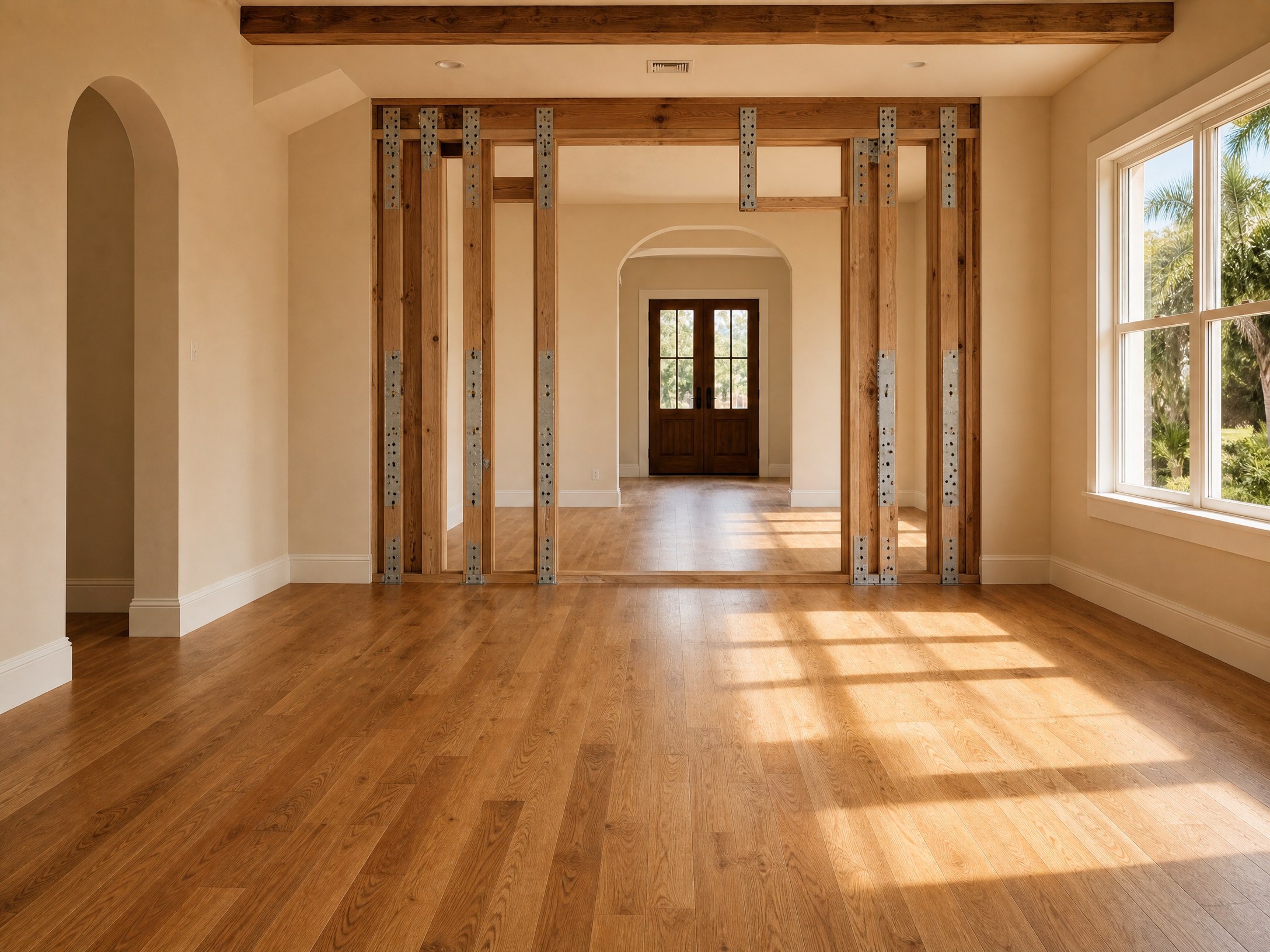
Why code-related coverage matters
Quick answer: Standard property insurance pays to put back what you had. It does not pay the extra cost of meeting building codes that changed since your property was built. That gap is covered by a separate provision called Ordinance or Law coverage. Under Florida Statute 627.7011, insurers must offer it, and unless you refused it in writing, your policy includes it at 25 percent of your dwelling limit. You can elect 50 percent instead. On an older Florida building, the difference between those two numbers can be the difference between a finished rebuild and a stalled one.
Most owners have never looked at this line on their declarations page. It becomes the most important number on the page the moment a building department requires an upgrade.
The gap, in one example
Your home was built in 1994. A storm takes the garage door. Your policy pays to replace the garage door.
But the current Florida Building Code requires a wind-rated door on that opening. The compliant door costs meaningfully more than a like-for-like replacement of what you had. Standard coverage pays the value of what was destroyed. The difference is a code-upgrade cost, and that is what Ordinance or Law coverage exists to pay.
Multiply that across an entire structure, and the number stops being a rounding error.
What Florida law actually requires
Under Florida Statute 627.7011, an insurer must offer you a choice before issuing a homeowners policy:
- A policy that excludes law and ordinance costs, or
- A policy that includes them, with the additional costs "limited to 25 percent or 50 percent of the dwelling limit, as selected by the policyholder"
Here is the part worth knowing: unless you provided a written refusal, your policy includes law and ordinance coverage at 25 percent of the dwelling limit by default. Many Florida owners have this and do not realize it. Others assumed they had more.
Pull your declarations page and look. It is usually a percentage, not a dollar figure.
What it covers, in three parts
Ordinance or Law coverage generally addresses three distinct costs:
Repairs to the damaged portion. The extra expense of rebuilding the damaged part of the structure to current code rather than to the original specification.
Demolition and reconstruction of undamaged portions. If a code or ordinance requires the rest of the building to be torn down and rebuilt because of the damage, this covers that.
Repairs to undamaged portions. Work on parts of the building that were not damaged but must be brought to code in order to complete the repair.
That second category is the one that connects directly to the substantial damage threshold. When a Florida building is declared substantially damaged, the requirement extends to the entire structure. A local building department makes that determination using the requirements that apply to the specific property.
A concrete Florida example: the 25 percent roof rule
Roofing is where most Florida owners meet this issue first.
Historically, if more than 25 percent of a roof or roof section was repaired, replaced, or recovered within a 12-month period, the entire roofing system or section had to be brought to current Florida Building Code.
Section 553.844(5), Florida Statutes narrowed that. If the existing roofing system was built, repaired, or replaced in compliance with the 2007 Florida Building Code or a later edition, and 25 percent or more of it is now being worked on, only the repaired portion has to meet current requirements rather than the entire roof.
The practical consequences:
- Built or replaced to the 2007 Florida Building Code or later, with documentation: The repaired portion must comply.
- Older roof or no documentation of code compliance: The full roofing system or section may need to comply.
- Under 25 percent of the section in a 12-month period: The requirement may be limited to the repair scope.
Documentation is doing real work in that table. If you replaced your roof in 2015 but cannot show it was permitted and inspected, you may not get the benefit of the exception. Permit records are worth locating before a claim, not during one.
How to find out what you have
Read your declarations page. Look for "Ordinance or Law" or "Law and Ordinance." It will typically read as a percentage of Coverage A.
Do the arithmetic now. If your dwelling limit is $400,000 and you carry 25 percent, that is $100,000 available for code-required upgrades. Ask yourself whether that is plausible for your building's age and construction.
Ask your agent what 50 percent would cost. For an older structure in a coastal or high-wind area, the premium difference is often modest relative to the exposure. This is a question to ask at renewal, not after a storm.
Locate your permit history. Records showing when your roof, openings, and structural connections were brought to code determine which requirements apply to you.
Where owners get hurt
Assuming replacement cost coverage covers code. It does not. Replacement cost means replacing what you had. Code upgrades are a separate category.
Carrying 25 percent on a building constructed decades ago. The older the structure, the wider the gap between how it was built and what the code now requires, and the more of the rebuild falls into that category.
Discovering the limit mid-project. By the time a building department has issued corrections, the scope is set. Knowing your limit beforehand shapes decisions about phasing and scope.
Not documenting code-driven costs separately. Ordinance or Law is a distinct coverage with a distinct limit. If code-required work is not identified and documented as such in the estimate, it can end up buried in the general repair scope and never properly claimed. This is one of the more valuable things a reconstruction contractor does on your behalf.
What we do about it
When we scope a rebuild, we identify code-required work separately from restoration work. That means the estimate distinguishes what is putting the building back from what current code obligates, so your adjuster can apply the right coverage to the right line.
It is unglamorous, and it is frequently the difference between a claim that funds the project and one that leaves an owner covering the gap.
Frequently asked questions
What is Ordinance or Law coverage? It pays the additional cost of meeting current building codes when you repair or rebuild after a covered loss. Standard property coverage pays to restore what you had; it does not pay the extra cost created by codes that changed since the building was constructed.
Is Ordinance or Law coverage required in Florida? Insurers are required to offer it under Florida Statute 627.7011. You are not required to buy it, but unless you refused in writing, your policy includes it at 25 percent of the dwelling limit. You may elect 50 percent instead.
How much Ordinance or Law coverage do I have? Check your declarations page for "Ordinance or Law" or "Law and Ordinance." It is usually expressed as a percentage of Coverage A. Florida's statutory options are 25 percent or 50 percent of the dwelling limit, with 25 percent as the default absent a written refusal.
Does replacement cost coverage pay for code upgrades? No. Replacement cost means replacing what you had with like kind and quality. The additional expense created by current code requirements is a separate coverage.
What is Florida's 25 percent roof rule? Historically, repairing or replacing more than 25 percent of a roof within 12 months required the entire roofing system to meet current code. Section 553.844(5), Florida Statutes narrowed this: if the roof was built, repaired, or replaced to the 2007 Florida Building Code or later, only the repaired portion must comply.
Should I increase my coverage to 50 percent? That depends on your building's age and construction, and it is a conversation for your agent rather than your contractor. As a general matter, the older the structure and the more the code has changed since it was built, the larger the potential gap at 25 percent.
Related resources
- Rebuild Post Loss
- Flood & Storm Reconstruction
- How the Insurance Reconstruction Process Works
- What Does Property Reconstruction Cost?
Important information
Statutory references are to Florida Statutes 627.7011 and 553.844(5) as published by the Florida Legislature. Statutes and building codes change; verify current requirements. This article is general information, not insurance or legal advice, and it is not a coverage determination. Your policy language and your carrier govern.
Before you begin a rebuild, call SP Reconstruction at (877) 716-1520. We can help you develop a clear reconstruction scope and identify code-required work that should be discussed with your insurance carrier.
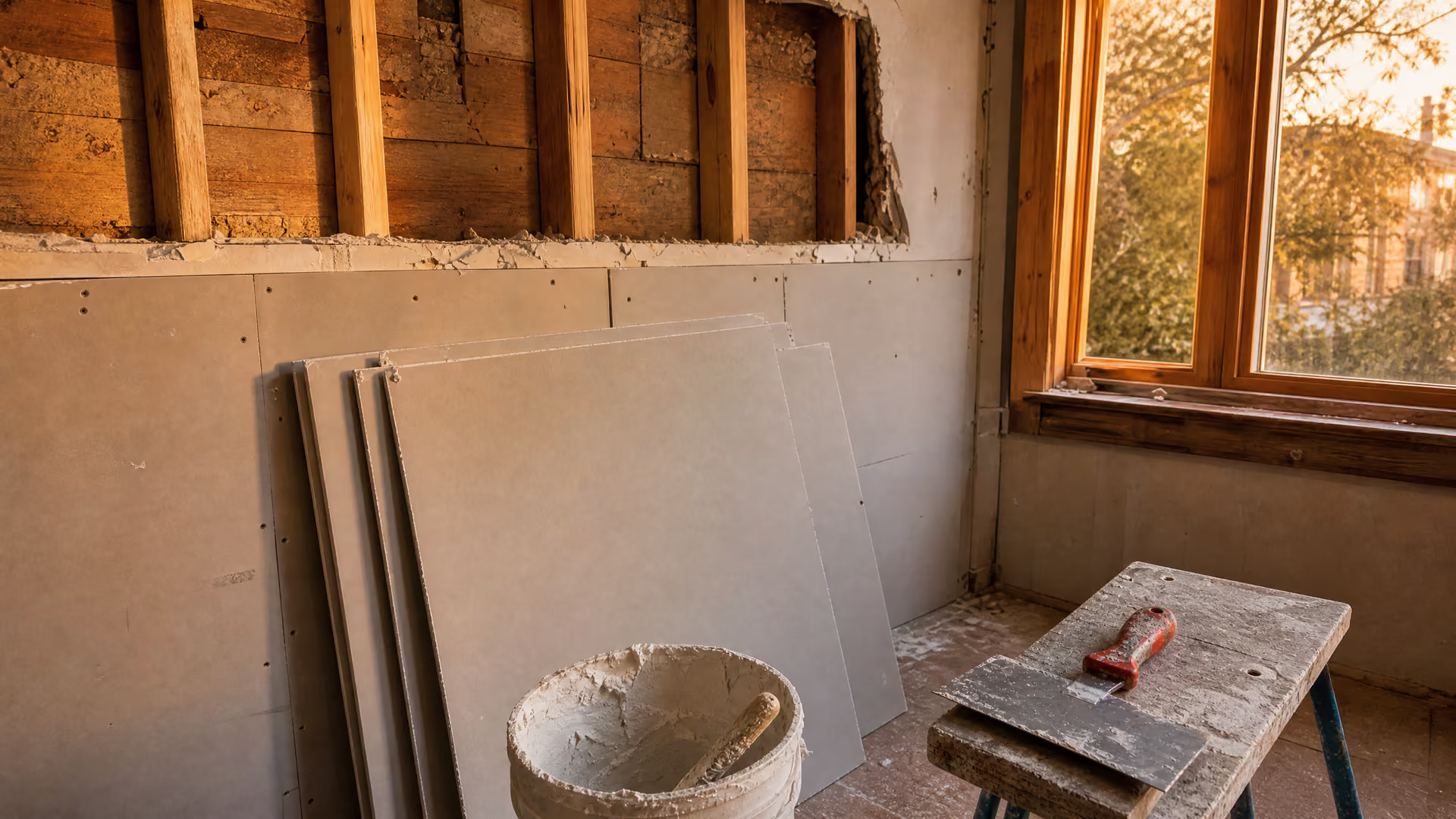
Construction vs. Reconstruction: Why the Difference Matters After Property Damage
Learn the difference between construction and reconstruction after water, fire, storm, or mold damage, and why the right sequence matters for a safe, efficient rebuild.
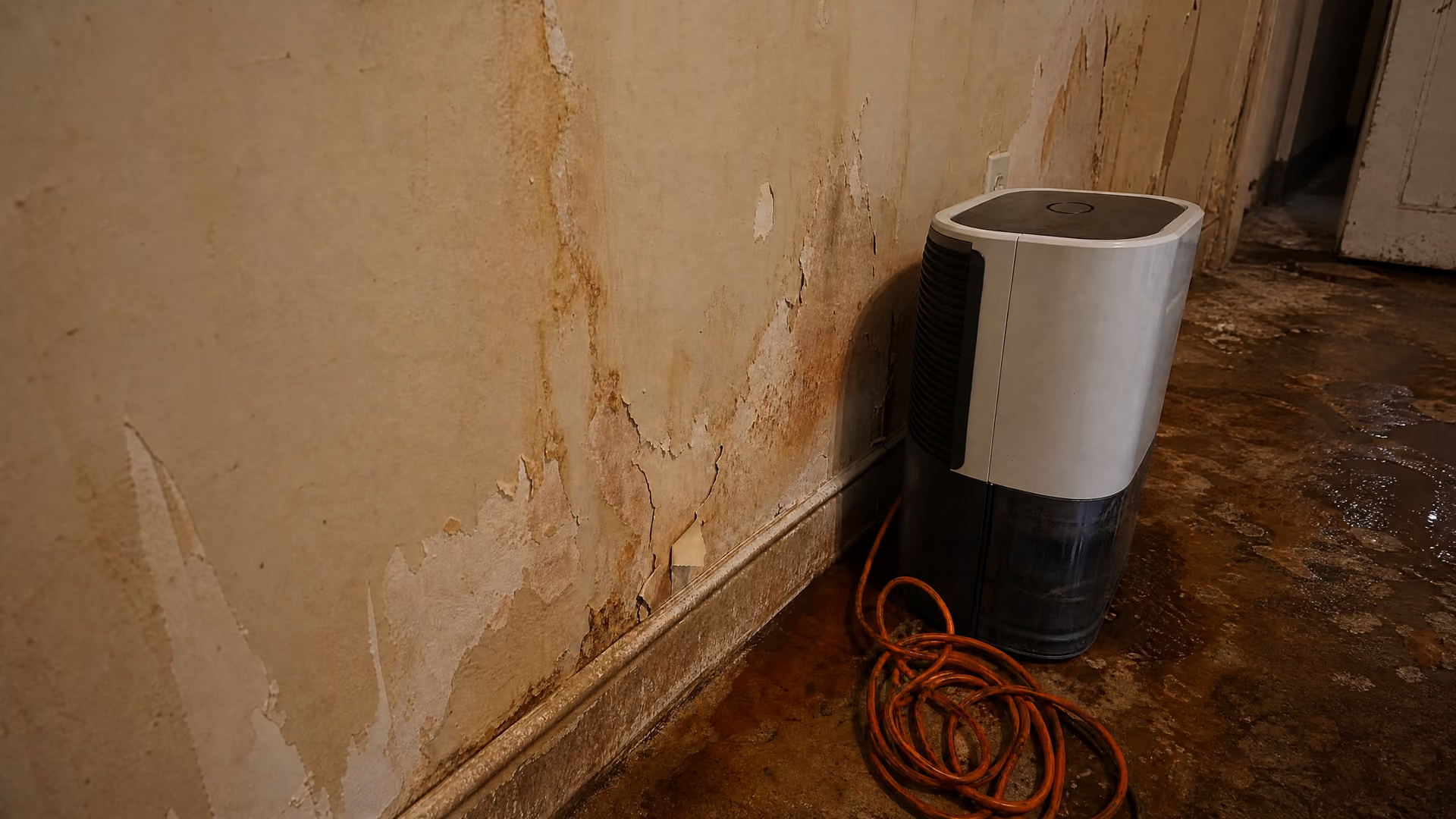
Why Water Damage Reconstruction Should Never Start Before Drying Is Complete
Water damage reconstruction should begin only after affected materials are removed, dried, and ready for repair. Learn why the sequence matters.


