


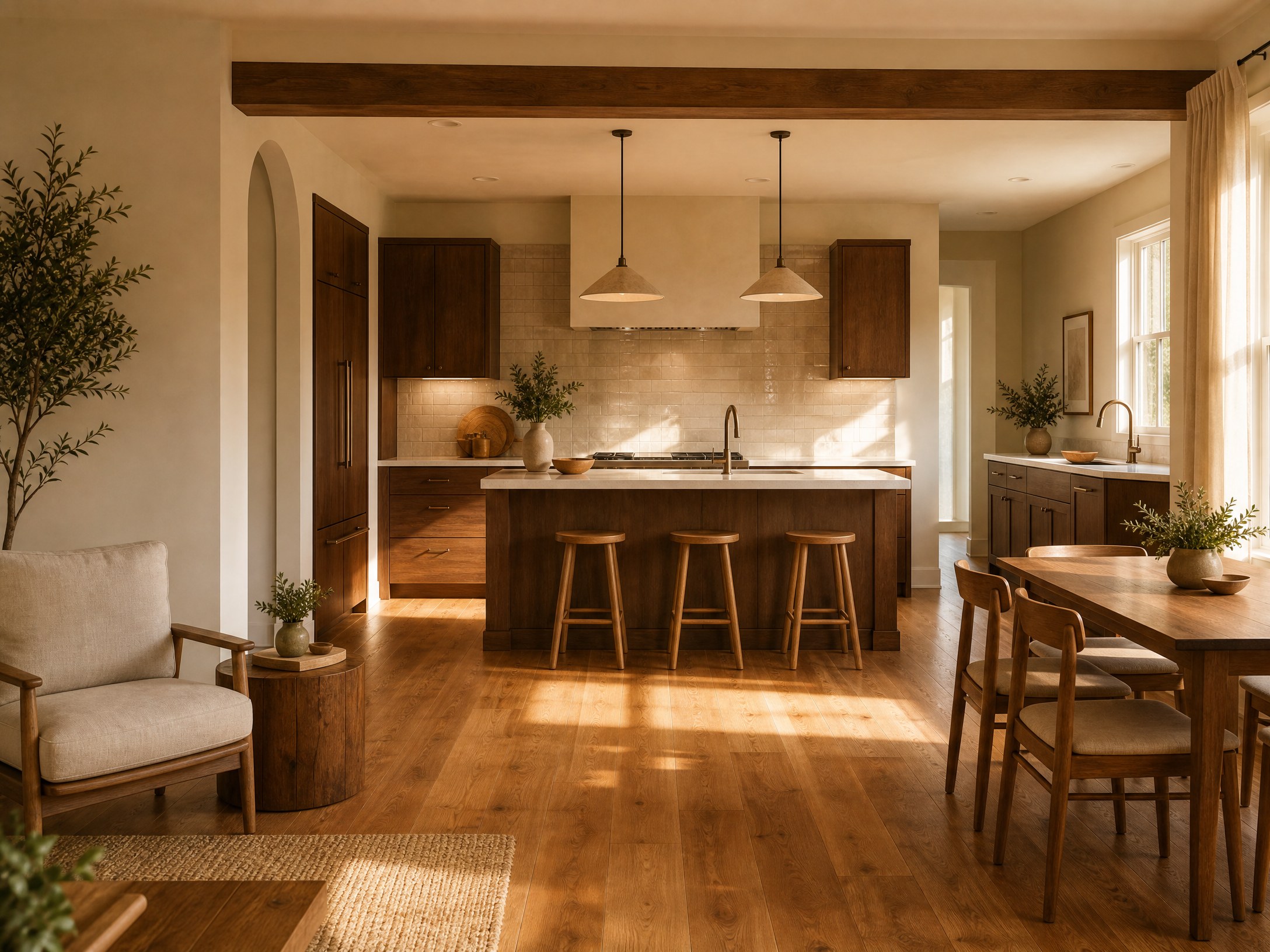
The smart way to plan an upgrade
Quick answer: Yes, you can upgrade during an insurance rebuild, and for a kitchen or bathroom it is often the most economical moment you will ever get. Your insurer owes you restoration to like kind and quality, which means replacing what you had. Anything beyond that is called betterment, and you pay for it. The rule that keeps this simple: the insurance scope and the upgrade scope must be priced, documented, and invoiced separately from the very first estimate. Mixing them is how projects end in a coverage dispute.
The rooms most likely to be gutted by a water loss are kitchens and bathrooms, and they are also the rooms people most want to change. That overlap is not a coincidence, and it is worth handling deliberately.
Why a loss is a genuinely good time to upgrade
Not a sales argument. Straightforward construction economics.
Demolition is already done and already paid for. The single largest hidden cost in a voluntary remodel is tearing out what is there. After a loss, that has happened as part of the mitigation.
The walls are already open. Moving plumbing, adding circuits, or relocating a vent is dramatically cheaper when the framing is exposed. Doing it later means opening finished walls again.
Permitting and mobilization are already underway. You are paying for a permit, a crew, and a project manager regardless. Marginal scope added to an active project costs less than the same scope as a standalone job later.
The disruption is already happening. You are already displaced or working around the work. A second remodel in two years means going through it twice.
One of our customers had flooring replaced after a kitchen water loss and later came back for a kitchen remodel. Doing both at once would have saved a mobilization.
The line between restoration and betterment
This is the entire concept, so it is worth being precise.
- Restoration under the insurer's scope: Replacing damaged cabinets with an equivalent grade, restoring the same countertop material, maintaining the same footprint and layout, using equivalent-grade fixtures, matching the existing flooring type, and repairing the damaged area.
- Betterment at the owner's cost: Upgrading from laminate to solid-wood cabinet boxes, moving from laminate to quartz, relocating a sink or removing a wall, selecting higher-specification fixtures or appliances, changing flooring material throughout, or extending new finishes into undamaged rooms.
Like kind and quality is the standard. If you had builder-grade cabinets, that is what is owed. Whether the replacement is identical is less important than whether it is equivalent.
There is one important exception in the other direction: code-required upgrades are not betterment. If current code requires something your original construction did not have, that is a code cost, and whether it is covered depends on your Ordinance or Law coverage rather than on your preferences. Whether that cost is covered depends on the code-related coverage in the applicable policy rather than on personal preferences.
How to structure it so nothing goes wrong
Settle the insurance scope first. Get the restoration scope defined and agreed before layering upgrades on top. An estimate that already contains upgrades is harder for an adjuster to evaluate and slower to approve.
Ask for two documents. One estimate for covered restoration work, one for the upgrade scope. Two documents, two invoices, one project.
Understand allowances and credits. When you upgrade, you generally receive credit for what the insurer owed on the item being replaced and pay the difference. Getting that credit stated explicitly is what keeps the arithmetic honest.
Watch the schedule. Custom cabinets and specialty countertops carry lead times that restoration-grade materials do not. Choosing a 10-week cabinet package can extend a project that would otherwise have finished sooner, and if you are displaced, that has a real cost.
Decide before demolition ends. Layout changes are cheap while the walls are open and expensive after drywall goes up. The decision window is earlier than most people expect.
When we tell people not to upgrade
There are situations where we would rather you did not.
You are living somewhere else and paying for it. Additional living expense coverage has limits. Extending a project by six weeks for a nicer countertop can cost more in temporary housing than the countertop.
The claim is still unsettled. Adding scope to an unresolved claim complicates it. Settle the covered work, then decide.
You are close to the substantial damage threshold. If your repair cost is approaching 50 percent of the structure's value, added scope can push the project into full code compliance, which is a much larger undertaking. Ask the local building department and your reconstruction professional how the added scope could affect the project before you proceed.
You are selling within a year. Recovering the cost of a high-end kitchen in a quick sale is uncertain. Restoration-grade finishes and a clean, documented rebuild often serve a near-term sale better than a personalized remodel.
What a kitchen or bath rebuild involves
Once demolition and drying are complete, the rebuild sequence runs roughly:
- Rough-in inspection of any relocated plumbing and electrical
- Insulation and drywall, taped, finished, and primed
- Flooring, depending on material and whether cabinets sit on top of it
- Cabinets, set and leveled
- Countertop templating, which happens after cabinets are set and adds a fabrication wait
- Plumbing and electrical trim, fixtures, appliances
- Tile, backsplash, paint, final finishes
- Final inspection and punch list
The countertop templating step surprises people. It cannot happen until cabinets are installed, and fabrication takes time after that. A kitchen looks nearly finished and then pauses. Knowing that in advance makes it much less frustrating.
One thing worth insisting on: reconstruction should not begin until drying is verified complete. Building finished surfaces over wet substrate is how a water loss becomes a mold problem months later. Our post on why reconstruction should never start before drying is complete covers this.
Frequently asked questions
Can I upgrade my kitchen during an insurance rebuild? Yes. Your insurer owes restoration to like kind and quality, and anything beyond that is betterment, which you pay for. The important thing is that the covered scope and the upgrade scope are estimated, documented, and invoiced separately from the start.
Will insurance pay for a better kitchen than I had? No. Coverage is based on replacing what was damaged with equivalent kind and quality. You typically receive credit for what the insurer owed on the replaced item and pay the difference for the upgrade.
Is it cheaper to remodel during a rebuild? For the same scope, usually yes, because demolition, permitting, mobilization, and disruption are already happening and the walls are already open. Moving plumbing or electrical is far less expensive with framing exposed than after finishes are installed.
Are code-required upgrades considered betterment? No. Work required by current building code is a code cost rather than a preference, and whether insurance covers it depends on your Ordinance or Law coverage, not on the betterment rule.
How long does a kitchen rebuild take after water damage? It depends on scope and materials, and the honest answer is that lead times drive it more than labor does. Countertops cannot be templated until cabinets are set, and fabrication follows, which is why kitchens often appear nearly complete and then pause.
When do I need to decide on upgrades? Before demolition finishes, ideally. Layout changes and utility relocations are inexpensive while walls are open and expensive once drywall is up.
Related resources
- Kitchen & Bathroom Remodel
- Rebuild Post Loss
- Flooring Replacement
- Why Water Damage Reconstruction Should Never Start Before Drying Is Complete
Important information
Betterment, like kind and quality, and allowance credits are general insurance construction concepts; your policy language and your adjuster determine what applies to your claim. This article is general information and not a coverage determination.
If a loss has opened up your kitchen or bathroom, call SP Reconstruction at (877) 716-1520. We can separate the covered restoration from any chosen upgrades so you can make an informed decision before finishes begin.
How the Insurance Reconstruction Process Works: A Step-by-Step Guide
Confused about how insurance pays for reconstruction after property damage? This step-by-step guide explains the entire process from scope of work to final payment.
Ordinance or Law Coverage: The Florida Policy Line That Decides Who Pays for Code Upgrades
Standard property coverage restores what you had. Learn how Florida Ordinance or Law coverage can help pay for required code upgrades.


