



What the rule means for your rebuild
Quick answer: If the cost to repair your building reaches 50 percent or more of the building's market value before the damage, Florida floodplain rules classify it as substantially damaged. At that point you cannot simply put the building back the way it was. The entire structure has to be brought into compliance with the current Florida Building Code and your local flood damage regulations, which in a flood zone can mean elevating the building. The value is the structure only, not the land, and that distinction is what catches most owners off guard.
This rule decides the scope of a rebuild before anyone picks a paint color. Owners who learn about it three weeks into a project have usually lost time and money they did not need to lose.
How the calculation actually works
Two numbers, one ratio.
The numerator is the full cost of repair. Not what your insurance pays. Not your deductible. The cost to restore the structure to its pre-damage condition, including labor, materials, and contractor overhead and profit. Local building departments generally require a signed cost breakdown and an attestation from both the contractor and the owner.
The denominator is the market value of the structure before the damage occurred, excluding land. This is where people miscalculate. In much of Florida the land carries a large share of a property's value, especially near the water. A property that sells for $600,000 might have a structure value of only $300,000, which means the substantial damage threshold is $150,000, not $300,000.
That single misunderstanding is the most common reason an owner is blindsided.
- Total property value including land: The rule uses the structure value only, with land excluded.
- What insurance is paying out: The calculation uses the full repair cost regardless of who pays.
- Just materials and labor: Contractor overhead and profit are included.
- Only the damaged portion: The calculation considers the full scope required to restore the structure.
What happens when you cross the line
The building must be brought into compliance with the current Florida Building Code and your local flood damage control regulations. Depending on the property and the flood zone, that can include:
- Elevating the structure above the base flood elevation
- Bringing the electrical, mechanical, and plumbing systems up to current code
- Meeting current wind load requirements for the roof, openings, and connections
- Flood venting in enclosed areas below the elevated floor
- Relocating equipment such as air handlers and water heaters above flood elevation
None of this is optional, and none of it is something a contractor can waive. The building department enforces it at permit.
The part almost nobody knows: it can accumulate
Substantial damage is measured per event. Substantial improvement is measured cumulatively, and that is where owners get caught.
Hillsborough County, for example, applies a 12-month accumulation period. The county defines it as beginning when the permit for the first improvement or repair is issued and running through the 12 months following the certificate of occupancy or final inspection, whichever gives the longer period. Multiple smaller projects inside that window add together toward the 50 percent threshold.
So a kitchen remodel in March, a bathroom in July, and a roof in November may be evaluated as a single improvement. Three projects that each seemed comfortably under the line can combine to cross it.
Accumulation periods vary by jurisdiction. Some Florida communities use a longer look-back, and some apply stricter local standards than the federal minimum. Your building department is the authority, not a general article, and that is worth a phone call before you start a second project.
Why this changes who you should hire
A rebuild that crosses the 50 percent threshold is not a repair job with extra steps. It becomes a code-compliance construction project with permitting, engineering, and inspection requirements that a repair contractor may not be equipped to carry.
It also changes the insurance conversation, because the cost of code compliance is generally not covered by standard property coverage. That is a separate coverage called Ordinance or Law, and whether you have enough of it determines who absorbs the difference. Review your policy before a loss and discuss the expected scope with a qualified reconstruction professional.
What to do before you commit to a scope
Get the structure value, not the property value. Your county property appraiser's records separate improvement value from land value. That is your starting point, though the building department may use a different accepted valuation method.
Ask the building department how they calculate it. Communities differ on accepted valuation methods and on what counts toward the cost side. Ask before you submit, not after.
Get a complete repair estimate, not a partial one. An estimate that covers only what insurance will pay understates the numerator and can produce a calculation the building department rejects.
Find out whether you have recent permits open. If you are inside an accumulation window from a prior project, that history is part of the math.
Ask what compliance would actually cost. If you are near the line, the difference between 48 percent and 52 percent can be enormous. Knowing the number lets you make a real decision instead of discovering it at permit.
When crossing the threshold is the better outcome
We would rather say this than let it read as pure bad news.
An owner of an older Florida structure who is forced into full code compliance ends up with a building that is meaningfully more resilient than the one they had: current wind provisions, elevated equipment, modern systems. Insurance premiums often reflect that. So does resale, particularly for buyers who have been through a storm themselves.
If the building was going to need those upgrades within a decade anyway, being required to do them during a rebuild, when the structure is already open and part of the cost may be covered, is not the worst timing.
Frequently asked questions
What is the 50 percent rule in Florida? If the cost to repair a building reaches 50 percent or more of the building's market value before the damage, it is considered substantially damaged. The structure must then be brought into compliance with the current Florida Building Code and local flood damage regulations rather than simply restored to its previous condition.
Is the 50 percent based on my property value or just the building? The building only. Land value is excluded. This surprises many Florida owners, because in waterfront and high-value areas the land can represent most of the property's price, which makes the threshold far lower than people expect.
Does the 50 percent rule use what insurance pays or the full repair cost? The full cost of repair, including labor, materials, and contractor overhead and profit, regardless of how much of it insurance covers. Estimating only the insured portion understates the calculation and can get it rejected.
Can several small projects add up to substantial improvement? Yes. Substantial improvement is measured cumulatively over an accumulation period set by the local jurisdiction. Hillsborough County, for example, uses a 12-month window running from the first permit through 12 months after final inspection. Separate projects inside that window can combine to cross the threshold.
What happens if my building is declared substantially damaged? The entire structure must meet current code and flood requirements, which in a flood zone can include elevating the building, updating electrical and mechanical systems, meeting current wind load standards, adding flood vents, and relocating equipment above flood elevation.
Who decides whether my property is substantially damaged? Your local building department or floodplain administrator. They set the accepted valuation method and review the cost breakdown, usually with a signed attestation from the contractor and owner. Ask them how they calculate it before you finalize a scope.
Related resources
- Flood & Storm Reconstruction
- Rebuild Post Loss
- How the Insurance Reconstruction Process Works
- What Does Property Reconstruction Cost?
Important information
Substantial damage and substantial improvement definitions and the 12-month accumulation example are drawn from published Hillsborough County floodplain guidance implementing federal and Florida requirements. Rules and accumulation periods vary by jurisdiction and change over time. This article is general information, not a code determination or legal advice. Your local building department is the authority for your property.
If your property was damaged and you need a complete reconstruction scope, call SP Reconstruction at (877) 716-1520. We will help you understand the work ahead and the next practical steps for your property.
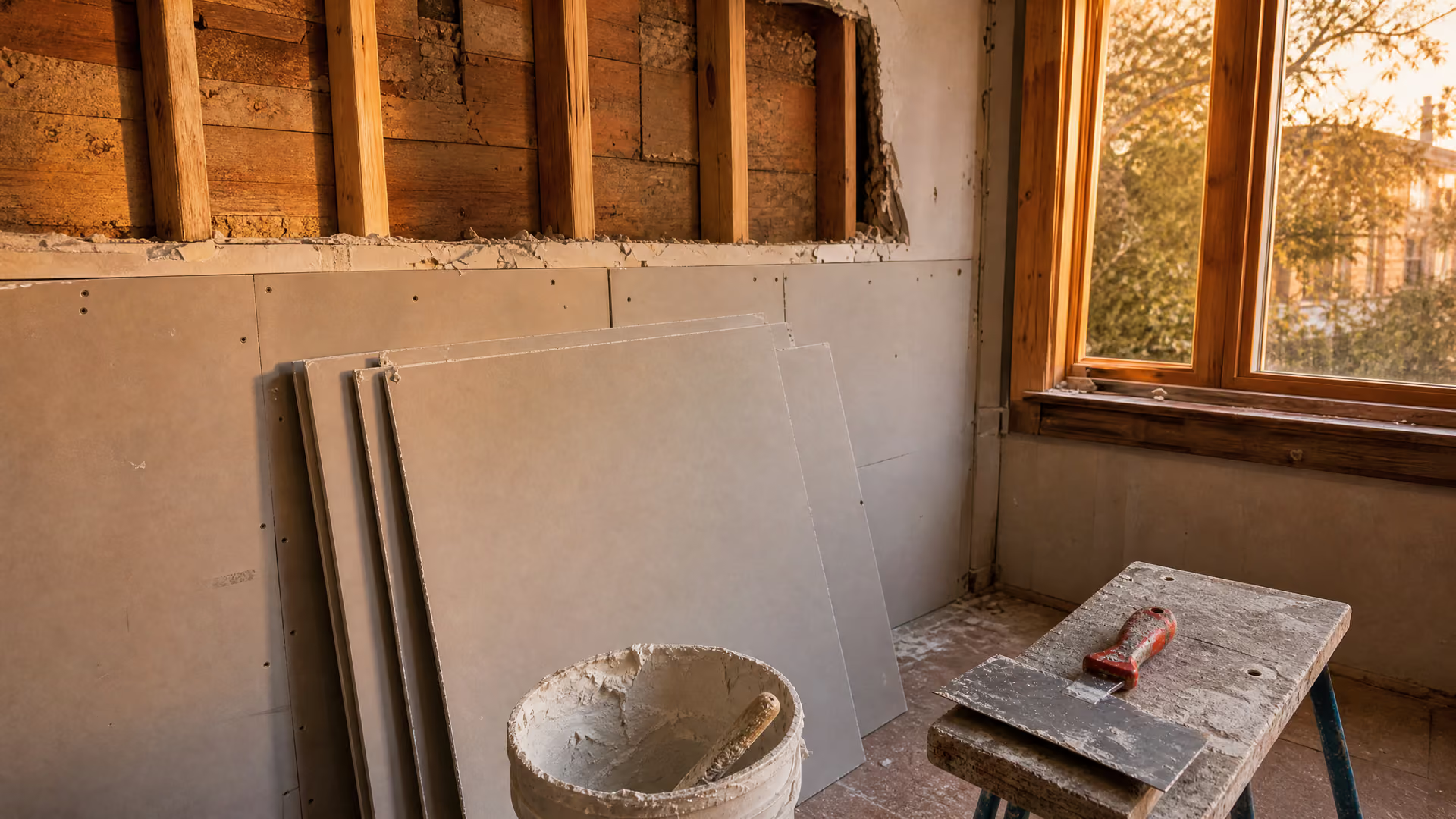
Construction vs. Reconstruction: Why the Difference Matters After Property Damage
Learn the difference between construction and reconstruction after water, fire, storm, or mold damage, and why the right sequence matters for a safe, efficient rebuild.
What Does Property Reconstruction Cost? Factors That Affect the Price
Wondering how much it costs to rebuild after water, fire, or storm damage? This guide breaks down the key factors that influence property reconstruction costs and how insurance fits in.


