



Understanding the ownership line after a loss
Quick answer: Florida Statute 718.111(11) draws a specific line. After an insurable loss, the association is responsible for reconstructing the condominium property as originally installed, of like kind and quality, per the original plans. The unit owner is responsible for what sits inside the unit boundaries and serves only that unit: floor, wall, and ceiling coverings, electrical fixtures, appliances, water heaters and filters, built-in cabinets and countertops, window treatments, and personal property. In practice this means the association's insurance stops roughly at the drywall, and everything you would recognize as finishes belongs to the owner.
That line is not intuitive, and it is the source of most of the friction we see on multifamily projects. Knowing which side of it your damage falls on, before demolition starts, prevents the argument that otherwise arrives at invoicing.
The split, item by item
- Association responsibility generally includes: Structural elements, the roof, exterior walls, common systems and common elements, plus drywall as originally installed.
- Unit owner responsibility generally includes: Floor, wall, and ceiling coverings; built-in cabinets and countertops; electrical fixtures; appliances; water heaters and water filters; window treatments and hardware; and personal property.
The statute directs that association coverage exclude "all personal property within the unit or limited common elements, and floor, wall, and ceiling coverings, electrical fixtures, appliances, water heaters, water filters, built-in cabinets and countertops, and window treatments."
The shorthand people use is "drywall out." The association's obligation runs to the structure and the drywall as originally installed. The finishes on and inside that drywall are the owner's.
The complication: this split is for insurable events
The allocation above governs reconstruction after an insurable loss, such as a hurricane, a fire, or a sudden water event.
For damage that is not an insurable casualty, responsibility is determined by the association's governing documents: the declaration, bylaws, and rules. Those documents vary considerably from building to building, and they can allocate maintenance obligations differently than the statute allocates casualty reconstruction.
So the honest answer to "who pays" is often two answers: one for casualty events, one for everything else. Anyone who tells you there is a single rule for every situation has not read the declaration.
Where this gets expensive in practice
A water loss crossing multiple units. Water from one unit that damages three others creates a reconstruction scope spanning association property and several owners' finishes at once. Sequencing that so each party's insurer sees a clean, separately documented scope is most of the work.
Cabinets and countertops. These are among the most expensive items in a unit and they sit squarely on the owner's side. Owners routinely assume the association's policy covers them. It generally does not.
Flooring across the threshold. Floor coverings are the owner's. The substrate and structure beneath are usually not. A single flooring replacement can touch both sides of the line.
Older buildings and code compliance. When repairs to an older condominium trigger current code requirements, the added cost lands somewhere. Whether that is association or owner depends on what is being upgraded and what the policies carry for code coverage. The allocation depends on the work being upgraded and the code-related coverage within the applicable policies.
What has changed for Florida condominiums
Florida's condominium safety framework tightened significantly in recent years, and it shapes the environment every association is now operating in.
Milestone inspections. Under Florida Statute 553.899, condominium and cooperative buildings three or more habitable stories tall must undergo a milestone structural inspection at 30 years from the original certificate of occupancy, and every 10 years after. Phase 1 is a visual assessment. If it identifies substantial structural deterioration, a Phase 2 inspection follows with testing and repair recommendations. Buildings of four units or fewer, and single-family homes, duplexes and triplexes, are not covered.
Coastal timing varies. Earlier rules applied a 25-year threshold to buildings near the coast. Later legislation moved this toward local determination, so many South Florida jurisdictions still apply the earlier timeline. Check with your local enforcement agency rather than assuming.
Structural Integrity Reserve Studies. Associations must complete a SIRS estimating the remaining useful life and replacement cost of major structural components so reserves are funded realistically.
The practical effect is that more Florida associations are entering planned structural repair projects, not just emergency ones. That is a different kind of construction project, with a longer runway and more documentation, and it rewards a contractor who works comfortably with boards, managers, and engineers.
What boards and managers should ask a reconstruction contractor
Will you scope association work and unit owner work separately? If they come back with one number, the allocation problem lands on the board.
How do you handle occupied buildings? Residents living through a project need containment, noise and access management, and a schedule they can plan around. This is a real skill and not every contractor has it.
Can you work to an engineer's repair specification? Post-milestone repairs generally follow an engineered scope. The contractor executes to that document rather than designing the fix.
What does your documentation look like for multiple insurers? A multi-unit loss can involve the association's carrier and several owners' carriers at once. Documentation that satisfies one may not satisfy all.
Who is our single point of contact? Board members and managers are volunteers or already overloaded. Named project management matters more here than on a single-family job.
The honest caution
If your association is looking at a repair project driven by a milestone inspection, the reconstruction contractor is not the first call. The engineer is. The inspection report and the repair specification come first, and a contractor who offers to skip that step and start pricing repairs is doing the board a disservice.
We are happy to review a specification and price the work in it. We are not the party who should be writing it.
Frequently asked questions
Who is responsible for repairs after water damage in a Florida condo? For an insurable loss, Florida Statute 718.111(11) makes the association responsible for reconstructing the condominium property as originally installed, while the unit owner is responsible for floor, wall, and ceiling coverings, electrical fixtures, appliances, water heaters and filters, built-in cabinets and countertops, window treatments, and personal property.
Does the condo association's insurance cover my cabinets and flooring? Generally no. The statute specifically excludes floor, wall, and ceiling coverings and built-in cabinets and countertops from association coverage. Those are typically the unit owner's responsibility and are a common source of unexpected cost.
What does "drywall out" mean in a Florida condo? It is shorthand for the split: the association's reconstruction obligation runs to the structure and the drywall as originally installed, and the finishes applied to or inside that drywall belong to the unit owner.
What is a milestone inspection? A structural inspection required under Florida Statute 553.899 for condominium and cooperative buildings of three or more habitable stories at 30 years from the original certificate of occupancy, then every 10 years. Phase 1 is visual; Phase 2 follows only if substantial structural deterioration is found.
Does the statute cover every kind of damage? No. The allocation applies to insurable casualty events. For damage that is not an insurable loss, responsibility is governed by the association's declaration, bylaws, and rules, which vary from building to building.
Can one contractor handle both association and unit owner work? Yes, and it is usually more efficient, provided the scopes and the invoicing are kept separate so each party and each insurer sees only what belongs to them.
Related resources
- Commercial Reconstruction
- Commercial Redesign
- Rebuild Post Loss
- How the Insurance Reconstruction Process Works
Important information
Statutory references are to Florida Statutes 718.111(11) and 553.899. Condominium governing documents vary and may allocate responsibilities differently for non-casualty damage. Inspection timelines have been amended by recent legislation and some requirements are set locally. This article is general information, not legal advice. Your association's counsel and your local enforcement agency govern.
If your association, property manager, or unit owner group is facing a reconstruction project, call SP Reconstruction at (877) 716-1520. We can prepare clearly separated scopes and coordinate the work with the parties involved.
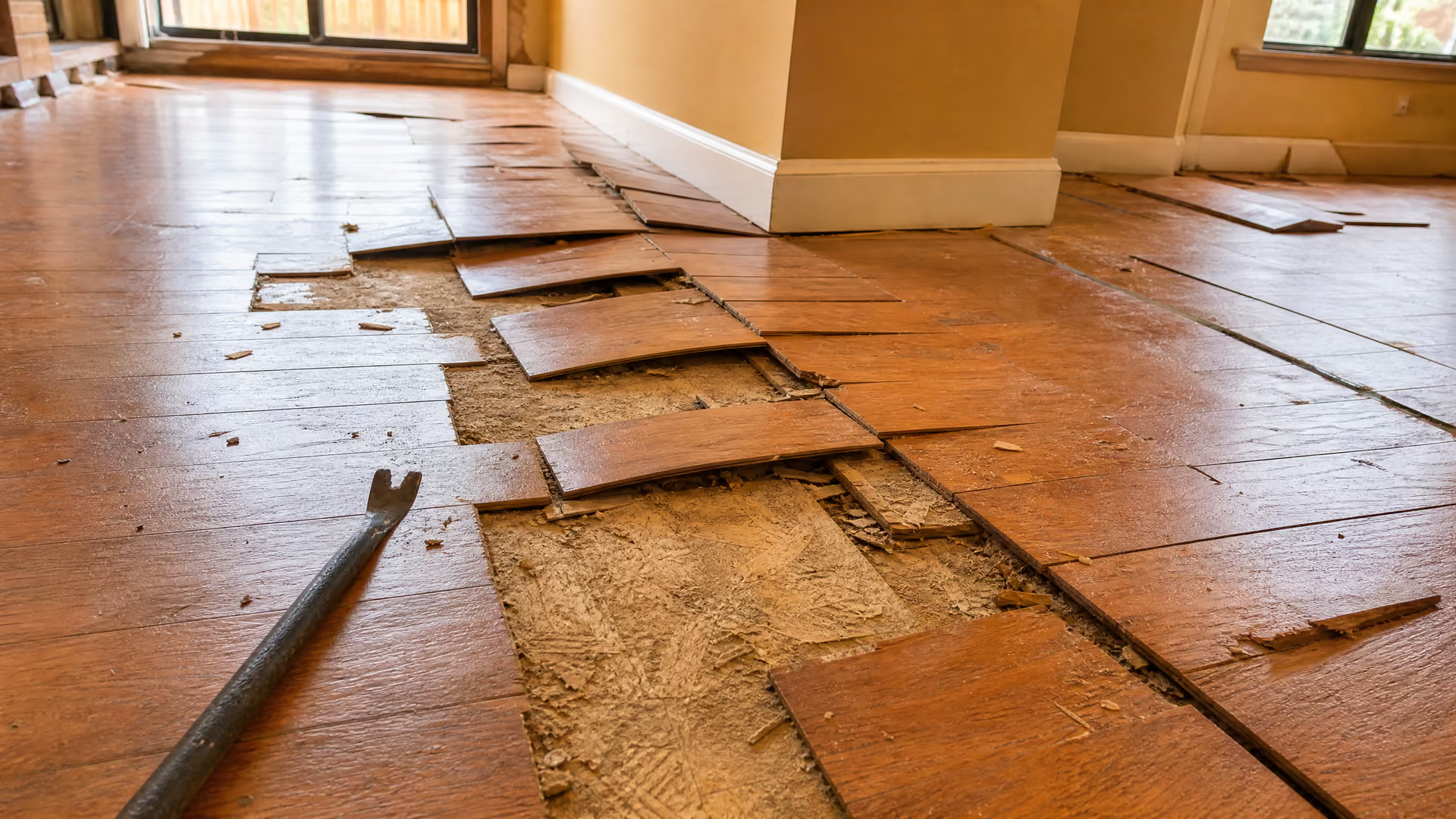
Flooring Replacement After Water or Fire Damage: What You Need to Know
Does water or fire damage always mean replacing your floors? Learn how different flooring types respond to damage, when replacement is necessary, and how insurance covers the cost.
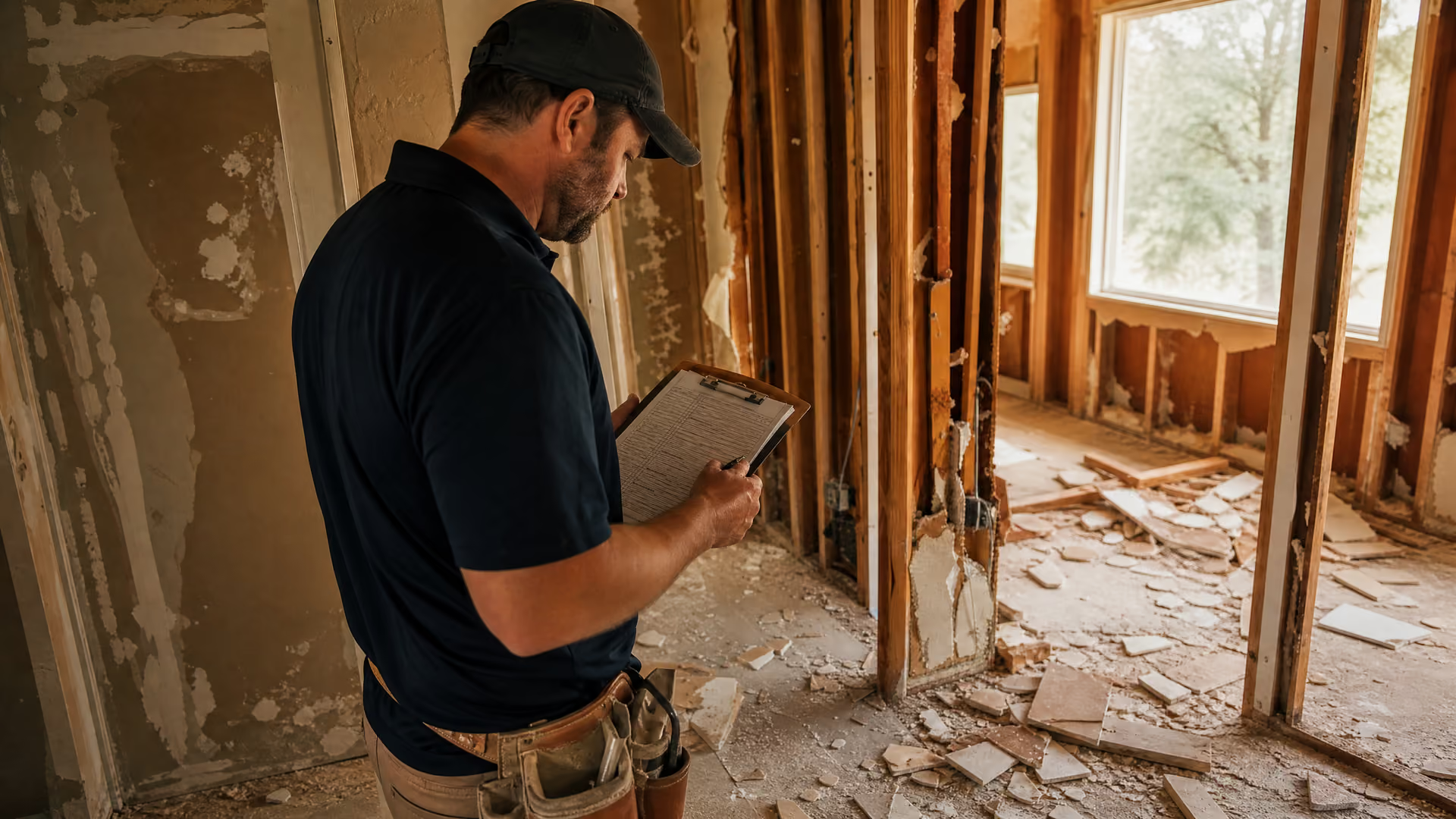
How to Choose a Reconstruction Contractor After Property Damage
Not all contractors are qualified for post-loss rebuilding. Learn the key certifications, questions to ask, and red flags to avoid when choosing a reconstruction contractor after fire, water, or storm damage.


